

I’ve held onto this EDIT for nearly a month. I wasn’t ready to share it. Getting to the end of the month felt like survival.
Two years ago this month my best friend died. My former brother-in-law as well.
And a few weeks ago, I learned that another friend from an earlier chapter of my life had passed away. Distance had grown between us over the years, but the news still rocked me.
March, it seems, has become a month that lives differently in my body than it does on the calendar.
Loss has a way of doing that.
These kinds of losses do not simply heal with time. Grief settles somewhere deeper. It lives in your bones. You never know when that tidal wave of heartbreak will roll in. Sometimes it’s bigger than others. It arrives unannounced. You learn to get comfortable crying openly in public when it does. You learn how to walk beside it, how to carry it forward, but it rarely disappears the way those beautifully curated Instagram posts suggest. It just doesn’t.
And what has struck me most this year is not only the accumulation of loss, but how differently the people around me are experiencing the same moment.
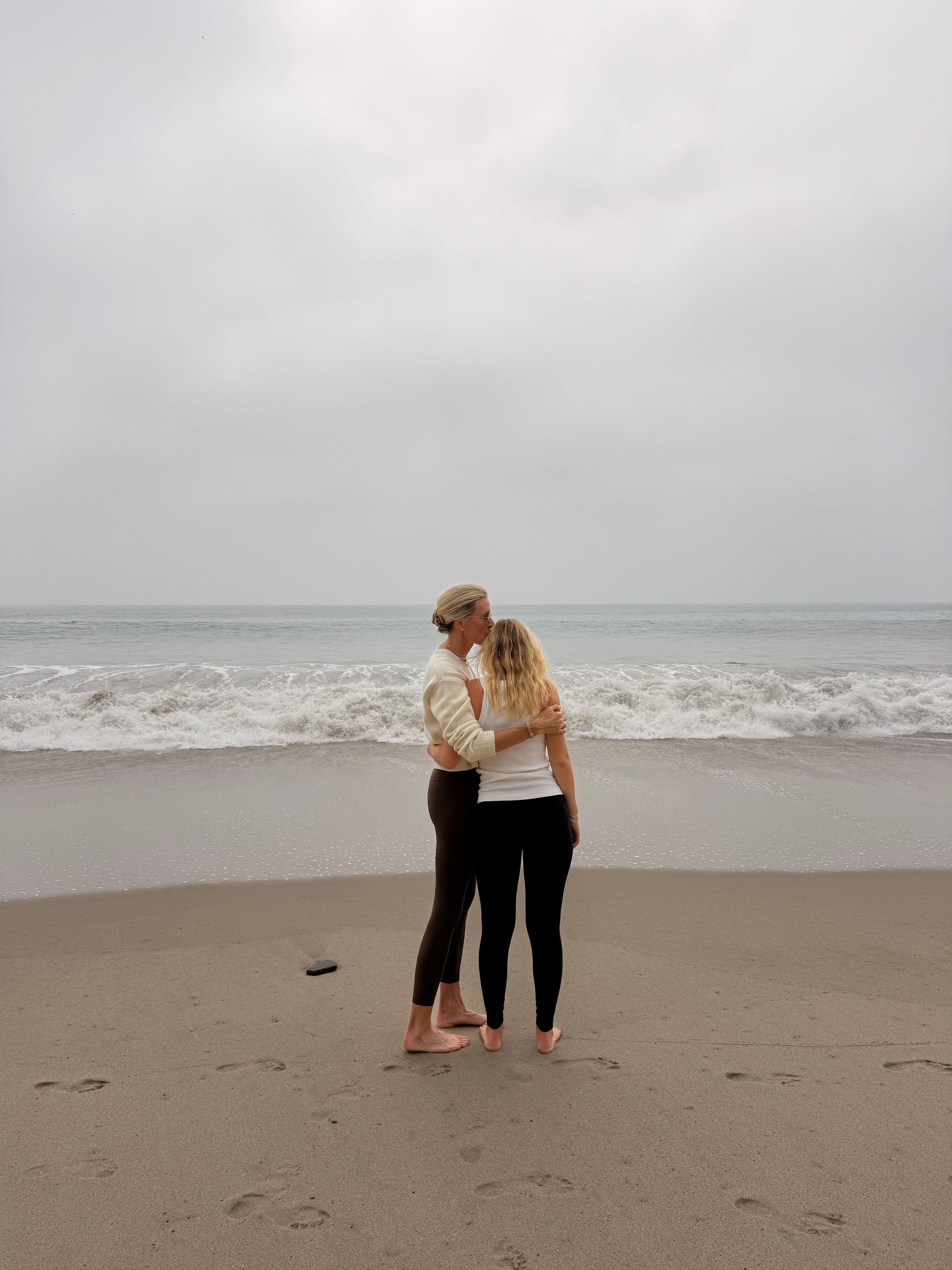
My daughter called recently in tears just thinking about entering March and everything it holds for her.
My bonus daughter woke in the middle of the night shaken by dreams she didn’t want to carry.
And I found myself listening to a podcast that had nothing to do with grief at all, yet one sentence landed squarely in the middle of everything I’ve been noticing.
We often assume everyone around us is living inside the same moment.
But we aren’t.
Grief makes that truth obvious inside a family.
Two people can lose the same person and still be living inside entirely different emotional timelines.
One person anticipates the date months ahead.
Another carries it quietly without speaking.
Another meets it unexpectedly in the middle of the night.

One wants to celebrate the anniversary of the passing, while another wants to privately honor the day without words.
For some people, grief means life must stop.
For others, it means learning how to carry forward what remains.
And thanks to one amazing coach who reminded me very early on, when I felt completely hopeless, of something simple.
Forward is a direction.
That was enough. It didn’t require a destination. It didn’t require a timeline. It didn’t require anyone else’s permission.
None of those responses are wrong.
They are simply different.
Lately I’ve started noticing this same dynamic everywhere.
There seems to be an expectation right now that we should all be reacting to the world in the exact same way, at the exact same time. That we should be consuming the same news, sharing the same outrage, listening to the same podcasts, speaking with the same urgency.
And if we’re not, silence is often interpreted as something else.
Ignorance.
Avoidance.
Head in the sand.
Or the assumption that we live in polarity, which quietly and unnecessarily creates division.
But sometimes silence is not avoidance or opposition.
Sometimes it is simply boundary.
When my late husband was alive, he woke up every morning and turned on every television in the house. News ran constantly. Morning until night. Every channel seemed to be narrating the state of the world. It was like living on the set of a major news network. And I couldn’t escape the noise.
After he passed away, I realized something surprising.
I never turned the televisions on during the day again.
Not once.
It wasn’t a political decision.
It was a necessary one.
The house had finally become quiet.
That doesn’t mean I’m unaware of what’s happening in the world. It simply means I am intentional about what I allow to live inside my space.
I was reminded of this again the other day when a friend called and said, “I just can’t with social media right now.”
It wasn’t the first time I had heard someone say something like that.
For many people, social media feels like a constant stream of outrage and bad news.
But the funny thing is, my social media brings me joy.
Somewhere along the way I fluffed my algorithm with golden retrievers and beautiful travel guides. Coastal villages. Train rides through the Alps. Small cafés tucked into quiet streets I long to explore. Unexpected corners of the world that make you pause and imagine the next adventure.
My feed has become something closer to a curated dreamscape.
A small window into possibility at the end of the day.
Not doom scrolling.
Intentional scrolling.
But people assume what they see is what I see.
And that simply isn’t true.
Just like we assume people are reacting to the world the same way we are.
Or grieving the same way we are.
Or moving through life on the same timeline we are.
But we aren’t.
And sometimes that difference reveals itself in ways that are far more personal than we expect.
What follows is difficult for me to share, but it is the moment that made this lesson impossible to ignore.