

I was recently at an event with a friend.
I introduced her to someone I’d known for years.
On the way home, she said something that stayed with me.
“It was interesting,” she said. “Her voice didn’t match her outfit.”
Like Peppermint Patty in a ballgown.
She didn’t mean it unkindly.
She meant it accurately.
I understood immediately.
It was like seeing a school kid dressed like a banker. Or, in my case, my daughter, Elise dressed as Milton Hershey (aka The Chocolate King).
It just doesn’t add up.

You don’t need context to feel that kind of mismatch.
The clothes suggested one identity.
Her voice told an entirely different story.
And once you notice that kind of disconnect, you start seeing it everywhere.
It wasn’t that the comment followed me straight into my closet.
It was that, in that moment, I realized I wasn’t fully in agreement with myself.
And as uncomfortable as that realization was, there is no greater friend than the one that leads you to that kind of awakening.
She wasn’t saying it for my personal inquiry.
But it provoked something inside me.
So here I am, in the middle of a purge.
Not a dramatic one, but an honest one.
I’m unwanting things I didn’t consciously choose.
Pieces for a character I no longer want to play.
A persona that never quite felt like my own.
What happens when it becomes easier to look aligned than to actually be aligned?
This is what I think of as the Zara effect.
Not the store itself, but the phenomenon it represents.
Fast access to identities that don’t necessarily belong to us.
Clothes that place us in a role we don’t yet know how to inhabit.
A way to look aligned without actually feeling aligned.
This isn’t about trends or fast fashion.
It’s about speed.
The speed at which we can borrow a silhouette, a posture, a version of ourselves, and move through the world as if it’s already ours.
So we walk into rooms dressed like one version of ourselves
and speak like another.
And the disconnect isn’t visual.
It’s energetic.
I know this pattern well.
It wasn’t that long ago that I purged. Really purged.
After my late husband passed away, I was physically moving and intentionally downsizing. Letting go felt necessary. Healing, even.
And yet here I am, several years later, realizing I need to shed again.
I’d love to blame myself for a lack of willpower, but if I’m honest, the loudest cheerleader for accumulation hasn’t been me.
And no, not you, Debi. We all have that one friend who can easily convince us it’s a need, not a want.
It’s been the internet.
Somewhere along the way, choice got blurry.
Our likes, saves, pauses, and searches are tracked so precisely that desire is no longer something we discover.
It’s something fed back to us by an algorithm every time we open an app.
Refined.
Sharpened.
Repeated.
Until it feels like preference.
And we cave into the double click that keeps the cycle going.
Buying more.
Wanting more.
Keeping UPS thriving.
Owning a vibration plate and a red light mask.
The algorithm doesn’t ask who we are.
It asks what holds our attention.
And over time, those two things can drift dangerously far apart.
Until suddenly, packages arrive.
We don’t wake up wanting the same things.
We’re trained to want them.
Shown versions of ourselves we might become.
Problems we didn’t know we had.
Outfits for lives we haven’t lived.
Aesthetic identities we think we want.
So we buy.
We save.
We emulate.
We accumulate.
Not because it aligns.
But because it’s familiar.
That’s how compulsory behavior sneaks in.
Not forced.
Subtly suggested.
And eventually, repeated enough times, suggestion starts to feel like desire.
Until we’re standing in a closet full of evidence that our choices were curated by a machine.
Through writing, personal cultivation, honest conversations, and the lens I’m finally willing to hold and the reflection I’m finally willing to see, I’ve realized something uncomfortable.
I, too, have become Peppermint Patty dressed in Zara.
This isn’t about trends.
It’s about alignment.
About the friction that shows up when what we present doesn’t match who we really are.
Clothes just happen to be one of the easiest places to see it.
People feel that friction.
Not always consciously, but viscerally.
It’s like reading an article clearly written by AI. Technically fine. Completely soulless.
It’s not judgment.
It’s recognition.
We’re tired of being duped.
When we open our phones, our computers, or turn on the news, it’s getting harder to tell what’s real.
Which is why alignment feels radical right now.
I’ve seen what alignment looks like when it isn’t borrowed.
Two aesthetics.
Two very different expressions.
The same internal agreement.
They weren’t performing an identity.
They were inhabiting one.
Their clothes reflected who they already were.
Diane Keaton dressed the way she thought.
Confident. Curious. Consistent. Unconcerned with approval.
Carolyn Bessette-Kennedy’s restraint wasn’t minimalism.
It was clarity. It was timeless.
Her clothes didn’t add volume to the room.
She did.

What made both of them compelling wasn’t style.
It was internal agreement.
I know what alignment feels like because I’ve lived it.
I never felt more true to myself than on my wedding day.
The words I spoke came straight from my heart. They were mine.
And the dress I wore wasn’t white.
It was blue.
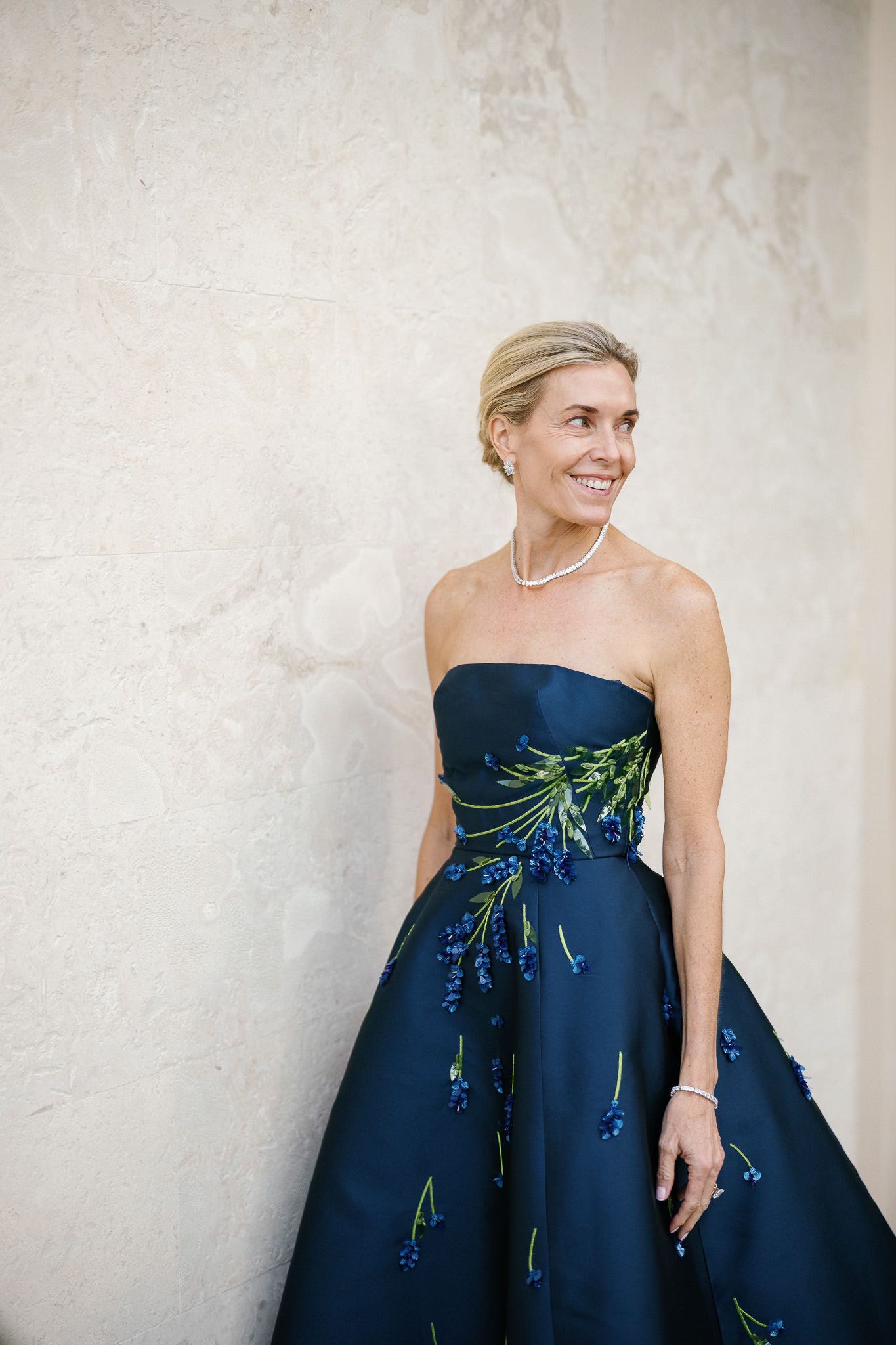
I didn’t choose it to make a point.
I loved it for everything it was and for everything it wasn’t.
I didn’t have to adjust myself to match it.
I didn’t have to explain the choice or justify it.
My voice and my body were in agreement. It was obvious.
That feeling is what I’m editing toward now. Not just in what I wear, but in how I live.
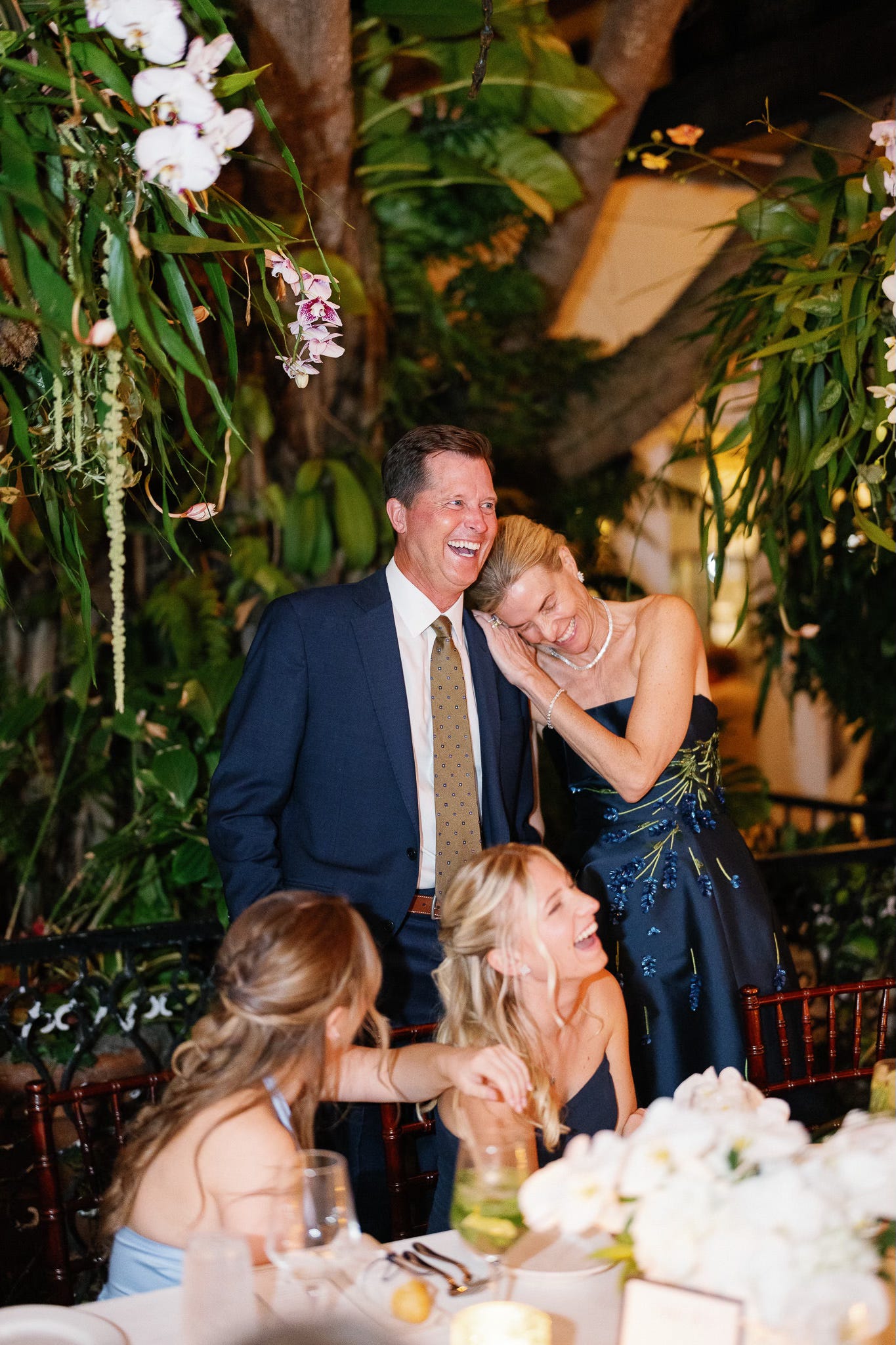
Once you’ve felt that kind of coherence, it becomes impossible not to notice where it’s missing.
I don’t want a full closet.
I’m done keeping things that no longer belong to the real me.
What stays now earns its place by being worn.
By being lived in and loved.
That’s power.
The kind that doesn’t ask for attention, but makes people listen.
This isn’t Marie Kondo minimalism, though I could do a whole EDIT on organization.
It’s congruence.
It’s removing the friction between who I am and how I appear.
Because when those two finally align, something settles.
You don’t have to prove yourself.
You don’t have to compensate.
You arrive already intact.
Always EDITing,
Leslie
The paid EDITS go deeper. If you’re not a paid subscriber, upgrade your subscription.