

I was on the phone with a friend the other day who chose peace as her word for the year. It’s a ritual I love too—choosing a word and letting it become a guidepost to live by, even knowing that life will immediately test it. Interestingly, when I look back at each of my words over the past five years, they seem to land exactly where I unknowingly needed them at the time.
I digress. Back to the story.
She was walking me through her week ahead and already felt overwhelmed. Listening to her had me wired. Peace was not present. Somewhere in the middle of everything she was unloading, she said, “I have dinner tomorrow night with my friend, Caroline, and her husband, and I really don’t want to go.”
She rushed to explain something that didn’t require explaining—at least not to me.
“Not because I don’t want to see her—I love her. I adore her. I’m just… done.”
My response came easily. We are often the last people to see what’s true for ourselves, yet it can feel painfully obvious when we see or hear it in someone else.
“Tell her you’re tapped,” I said. “Give yourself some grace.”
This is simple advice for me to give. My bandwidth for socializing is generally low, and I’ve gotten better over time at honoring that without apology. I know what happens when I push past my limits—I don’t become more generous, I just become depleted. And when I’m depleted, I’m crabby and irritable.
I would much rather be home in my sweatpants, making dinner with my husband and climbing into bed early. It’s our ritual, and one we protect. So if I’ve declined a dinner or an event, please don’t take it personally. My battery runs low—and I’ve learned to honor that. What I’m still learning is to honor it out loud.
There’s something quietly generous about that kind of honesty. As Marianne Williamson once observed, “As we let our own light shine, we unconsciously give other people permission to do the same”. Sometimes that truth is simple. It’s that kind of truth I want to practice until it surfaces naturally, every day.
But she’s not wired that way.
For her, canceling felt heavy. She’s deeply attuned to her inner world and the different parts of herself, and this situation tapped directly into an old, familiar story: I am bad. Logically, she knew what she needed to do. Emotionally, that voice was loud enough to hold her back.
We ended the call without resolution—suspended in that familiar tension between knowing what we need and feeling unable to claim it.
When we connected the next day, she said, “I talked to Caroline,” and I could hear the relief in her voice before she finished. “Her response was so generous. She completely understood. No guilt. No pressure.”
Peace, restored.
But what stayed with me wasn’t just that it worked out. It was how it worked out.
I didn’t hear Caroline’s words directly, but what she offered was the kind of response that immediately settles your nervous system. Spacious. Uncomplicated. And honestly—that’s gold. It made me think: this is the kind of friend I want to be. To the people in my life—and, if I’m being honest, to myself.
That realization opened a bigger question.
How often do we struggle to offer ourselves the same generosity we give so freely to others?
We understand exhaustion in other people. We encourage rest. We make room.
But when it comes to ourselves, we negotiate. We say yes when we’re really thinking no. We push. We override. I still do. And when my husband does it, it drives me crazy—probably because it touches the very thing that prompted me to write this.
He asked me for help with something yesterday, which I immediately agreed to. No hesitation. But on my way to help him, he called and said, “Never mind—I handled it myself.” It wasn’t a big task, but my frustration came from a deeper place. We are so hard on ourselves. Asking for help. Receiving help. Letting ourselves off the hook of overload—it’s all tangled together.
And then we wonder why peace feels so hard to come by.
What struck me most is that Caroline modeled the kind of friend so many of us want in our lives: patient, understanding, unambitious in her expectations.
The harder question is whether we can become that kind of friend to ourselves.
Can we respond internally with the same grace we offer outwardly—without justification, without guilt, without needing to earn it?
Generosity isn’t always about doing more. Sometimes it’s about releasing the need to prove, explain, or push through. I have no guilt booking a week at the spa and no shame telling others about it (more to come on that). But offering a simple, personal explanation for why I say no to a dinner invitation? I’m still working on that. I’m learning to own it: thank you, but I have a date with my sweatpants.
That kind of generosity doesn’t come naturally. It takes practice. And honesty. And often, discomfort. How many times have you thought, It’s easier if I just do it myself—when the truth is, that’s often just stubbornness dressed up as independence.
(To my daughter, Elise, pay attention to this line. You own this behavior. You also have the heart to let go and embrace others.)
I’m starting to believe this: peace doesn’t arrive because our lives finally calm down. It arrives when we stop fighting ourselves.
This year, I want to practice responding generously—to others, yes—but especially to myself. In the quiet moments. In the decisions no one else sees. The way a good friend would. The way that brings peace.
Looking back, my words tell that story better than I ever could have planned.

2021: Unstoppable.
Surviving the pandemic. Reframing and reinventing my business. Discovering a passion for running that took off with a Boston Qualifying first marathon. Unstoppable became the mantra I owned.
2022: Freedom.
George and I were planning an entirely new chapter—looking ahead to being empty nesters, building a home, embracing a new community, and reshaping our life together. It felt expansive and liberating.
2023: Grace.
I chose it thinking I’d need it as Elise was preparing to graduate and move to Malibu. I had no idea how much grace I would actually require. My husband passed away unexpectedly; grace became the one thing that carried me through the tidal wave.
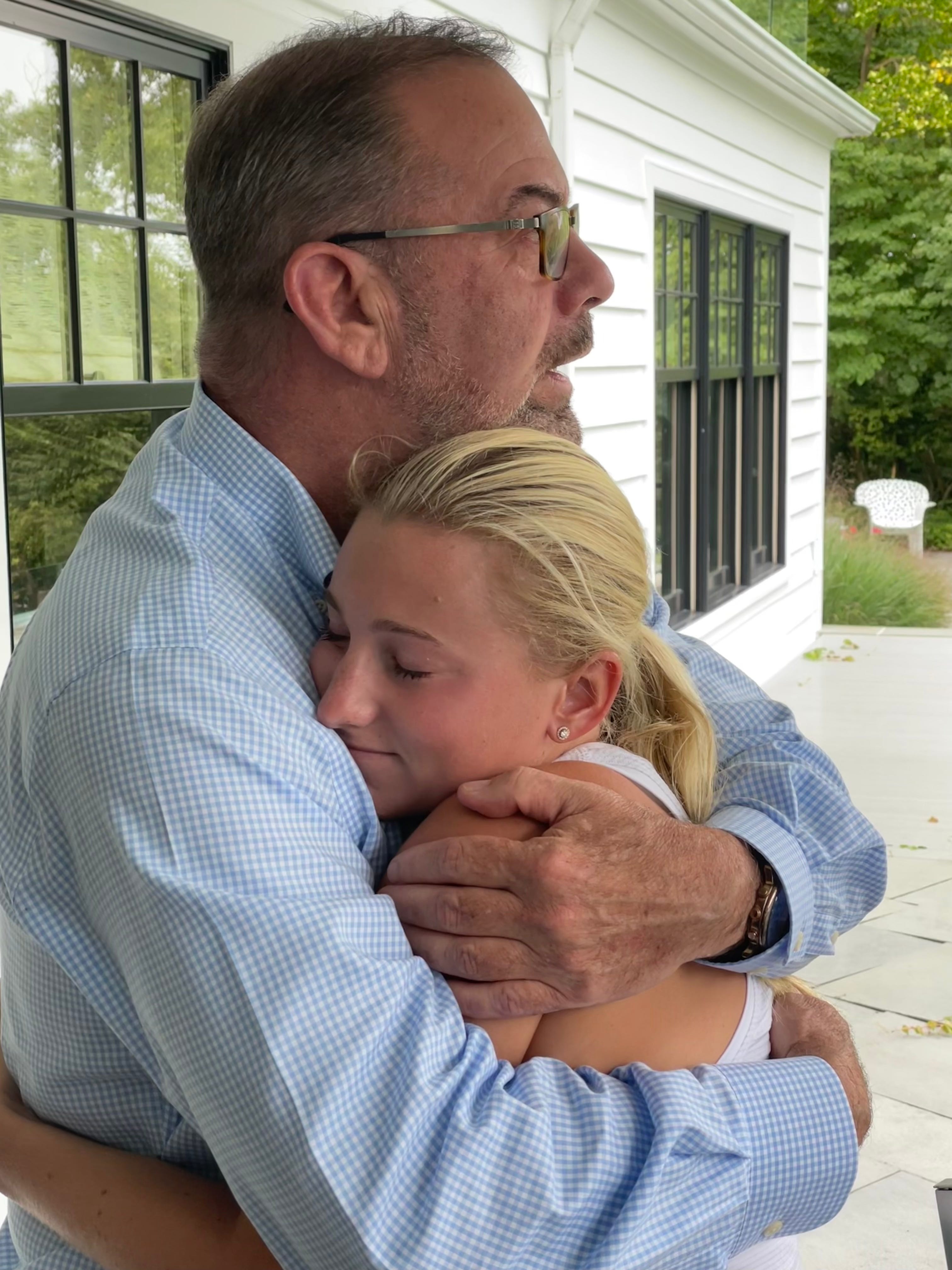
2024: Faith.
I uprooted my life. Sold my home. Bought a new one. Took risks that felt enormous at the time. Not everyone honored my choices, and some relationships didn’t survive it. I leaned hard on faith—lost it often, found it again.
2025: Alignment.
A year of settling into a new life that ended, unexpectedly and beautifully, with a wedding. Alignment, in every sense.
As for 2026, my word is discovery. Not discovery as reinvention—I’ve had enough of that—but discovery of what’s possible now. I’ve started a deeper dive into myself, and so much has already begun to open.
Cheers to peace.
Cheers to personal kindness.
Because when you discover these things for yourself, others feel it – and permission follows.
And thank you, Caroline, for unknowingly modeling what generosity really looks like.
In discovery,
Leslie
P.S. Life Lived: Unbeknownst to my friend Niki—who had no idea I was building my week around the theme of generosity—she sent me a text this morning asking to feature my Substack on her business page. That one simple gesture changed the trajectory of my day. That is who I want to be for others: the friend who acts purely from the heart. Thank you, Niki!
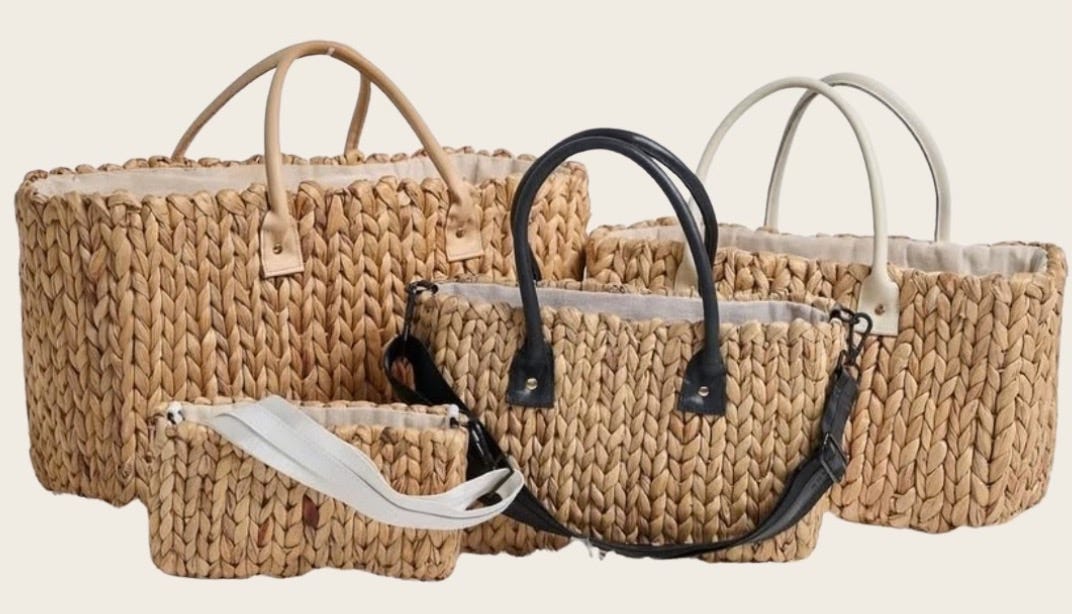
Anya & Niki is a wardrobe essential. Her bags are exquisite. Check them out here!
Here’s to your Year of Discovery!
Caroline's response is such a perfect example of generostiy without expectation. Honestly the hardest part of learning boundaries has been realizing how much easier it is to extend grace to others than to accept it for ourselves. I've noitced that when friends cancel on me bc they're overextended, I'm relieved - not offended - because it gives me permission to admit I was probably feeling the same way.