

A quick note: There's a giveaway at the end of this one, something for one of you, from one of my favorite Malibu shops. Worth reading through.
This morning I was watching a clip of Taylor Swift talking about her writing. Not her songs. Her process. And one line stopped me.
“I remember writing it and being like, oh my God, do you wanna say this? And I’m like, actually, I feel like a lot of people feel that way. That always overrides my discomfort if a line feels too true. Because I don’t really think there’s anything that’s too true.”
That made me pause.
Because for the last several months, I have been writing around things. Tiptoeing. Polishing the edges. Saying just enough without actually saying the thing.
My writing coach called it.
“Take the lid off. Put your fingers on the keyboard and let it rip.”
It didn’t feel inspiring. It felt like a punch.
But he wasn’t wrong. And neither was she.
How do I make a newsletter really compelling? That’s the question I’ve been sitting with for months.
The answer started with a teeter totter.
I loved the playground when I was little. But the teeter totter? I never quite got it.
Even back then, it was flat.
It took me forty years to know why.
Here’s the thing about writing in public.
We start out honest. We publish something true. People connect with it, and a few people don’t. The few who don’t will say things. Sometimes loud. Sometimes pointed. Sometimes cruel.
And whether you mean to or not, you start writing toward them. The next piece is a little more measured. The one after that, a little more careful. You’re writing for the people who might be upset, not the ones who came because you were honest.
This is the teeter totter.
Criticism sits on one side. The pressure to play it safe sits on the other. You sit in the middle, between two opposing weights, trying to balance.
Your writing coach reads it and tells you it’s flat. The numbers stop moving. The connection thins. Subscribers don’t convert.
The criticism you’ve been absorbing came because of the very thing that was working. The vulnerability. The honesty. The willingness to say something true. That’s what drew people in. And that’s what drew the fire.
You start protecting yourself from the fire, and in doing so, you flatten the very thing readers came for.
The teeter totter doesn’t care which side has more truth on it.
It just balances.
There’s a second way I see this, and it’s more familiar than the first.
Years ago at the airport, I’d watch the luggage carousel and pray it wasn’t my suitcase that came around with the latch broken, and the contents spilling out for the whole baggage claim to see. The bra. The thong (I would die). The thing I’d shoved in at the last minute.
Nobody wants to be the messy suitcase. Seriously, I would walk away before I’d claim it as mine.
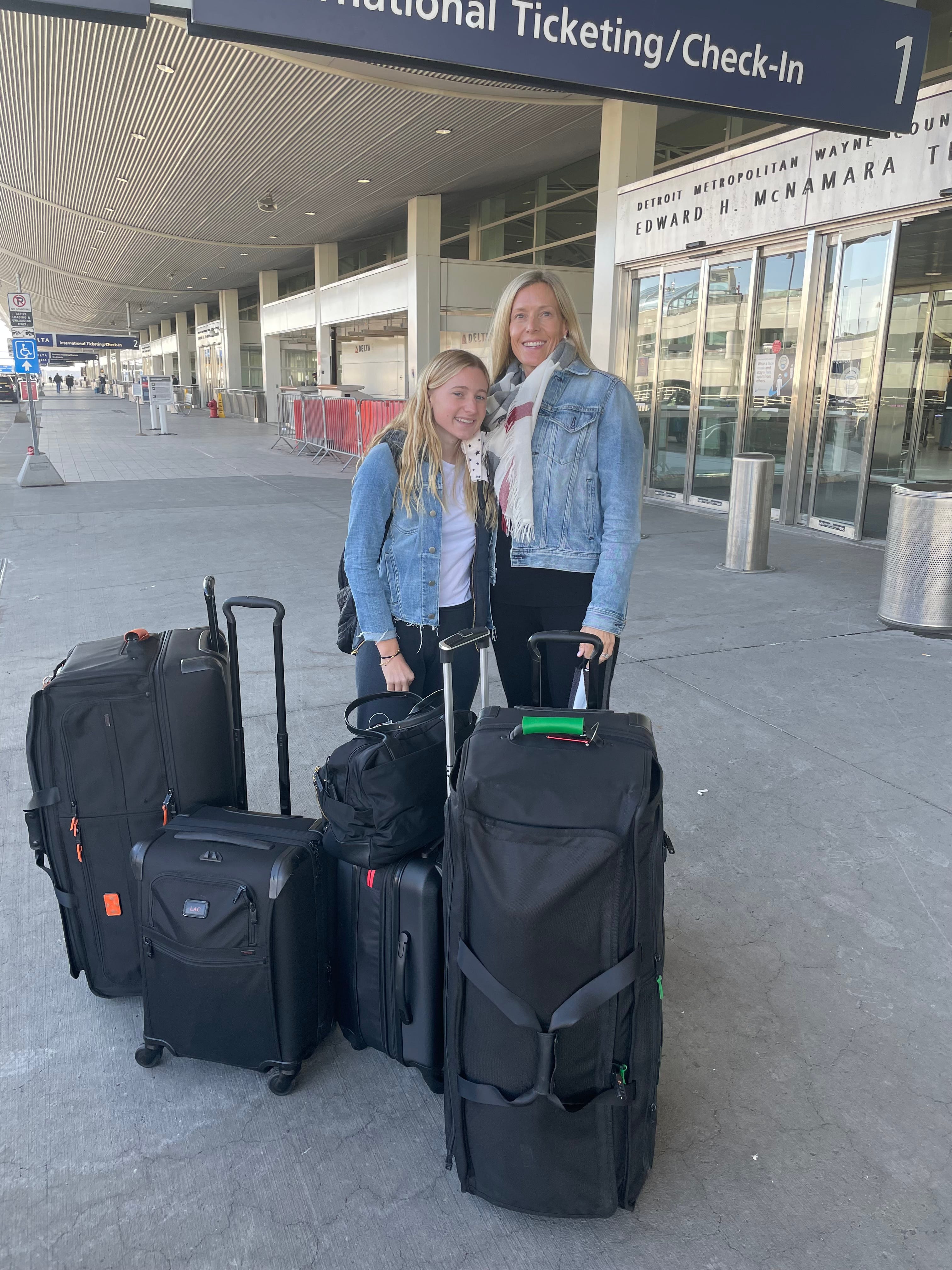
Whoever invented packing cubes is a genius. If TSA opened my bag tomorrow, it would look contained. Considered. Nothing falling out. Nothing damning.
This is what flat writing looks like.
Call it packing-cube writing. Everything in its place. Nothing exposed. Nothing the algorithm or the critic or the screenshotter could grab and hold up.
And it reads exactly like that. Contained, considered, closed. Flat.
I was with a friend recently and she mentioned someone we both know. “I have a hard time connecting with her,” she said. “I don’t know why.”
I knew why immediately.
The person she was describing is guarded. Not in an obvious way. In the way that gets felt across the table without ever being named. The packed-up version of a person.
The thing you think you’re hiding is exactly what the reader is sensing.
You can be honest and still write flat. The criticism you’ve absorbed has already edited the honesty before it leaves your fingers.
The flatness is the tell.
The packing cubes are the tell.
The careful sentence where you almost said it and then pulled back, that’s the tell.
The reader can’t always name what’s missing. But they feel it.
That’s why they don’t subscribe.
That’s why the piece you worked hardest to make palatable is the one that didn’t land.
That’s why the writer you can’t put down is the writer who’s exposed something you weren’t expecting them to.
That’s why the world loves Taylor Swift. She sings to what you’ve experienced but never had words for. She doesn’t hold back. She unpacks it all for the world to see.
What I’ve learned from my writing coach isn’t just about how to write.
When we started working together, he gave me a brand brief. A cohesive recap of everything I’d created with The Preferred EDIT to date. Thoughtful. Introspective. Honest.
One paragraph stopped me cold and has had me rethinking my life in its totality ever since.
It read:
Three years ago, Leslie’s husband George Chapman — a public figure — passed away unexpectedly from a spontaneous brain bleed on March 22, 2023. In the years since, she has navigated profound grief, launched her daughter Elise to college on the opposite coast, relocated from Ohio to Florida, sold and purchased homes, remarried to David, and undergone a wholesale reinvention of her life.
I’d been living it. I hadn’t been seeing it.
Reading the brief, and the articles it alluded to, I saw a pattern that long predated my writing. I’d been holding the container tight for decades. Maybe a lifetime.
Always waiting for the other shoe to drop.
So I learned to sit right in the center of the teeter totter. Playing it safe. Maintaining control through chaos by packing life neatly up wherever I could. Balanced.
The packing cubes weren’t a writing problem.
The packing cubes were a way of being.
What my writing coach, and ironically, Taylor Swift, have taught me is to move out of the center.
It’s like learning to walk again. It’s like learning a new language — internally, the conversations I have in my head, and externally, how I project myself into the world. How I want others to see me.
I am not the same person I was three years ago.
Thank goodness for that.
So here’s what I’m doing.
I’m getting off the teeter totter.
But not from feedback. Feedback is what got me here.
The criticism was flattening me. The pushback that called the flatness flat — that’s been the fuel. It lands me in a more introspective space than I was in before. For that, I’m deeply grateful.
I’m unpacking the cubes.
Some of what’s inside is uncomfortable. Some is fuel for other people’s fodder. Some of it might be again. But the alternative is writing a contained, considered, perfectly polished version of myself that no one wants to read, including me.
Some of what I’ve been packing into the cubes is going to come out. If you’ve only known the polished version of me, this is me telling you in advance.
Taylor said if a line feels too true.
There’s no such thing.
If you’re a writer and your work has gone flat, look at what you’ve been carrying on the other side of the teeter totter. Look at what you’ve been packing into cubes.
The reader knows.
They’ve always known.
Write for the few who showed up to take shots.
Or the many who showed up because you told the truth.
I’m learning. I’m unpacking. It’s my rewrite.
Take the lid off.
I finished this piece while flying somewhere over the western US, en route to Malibu to spend a few days with my daughter. My suitcase is packed. Packing cubes, naturally. If they all fell open, here’s what you would find.
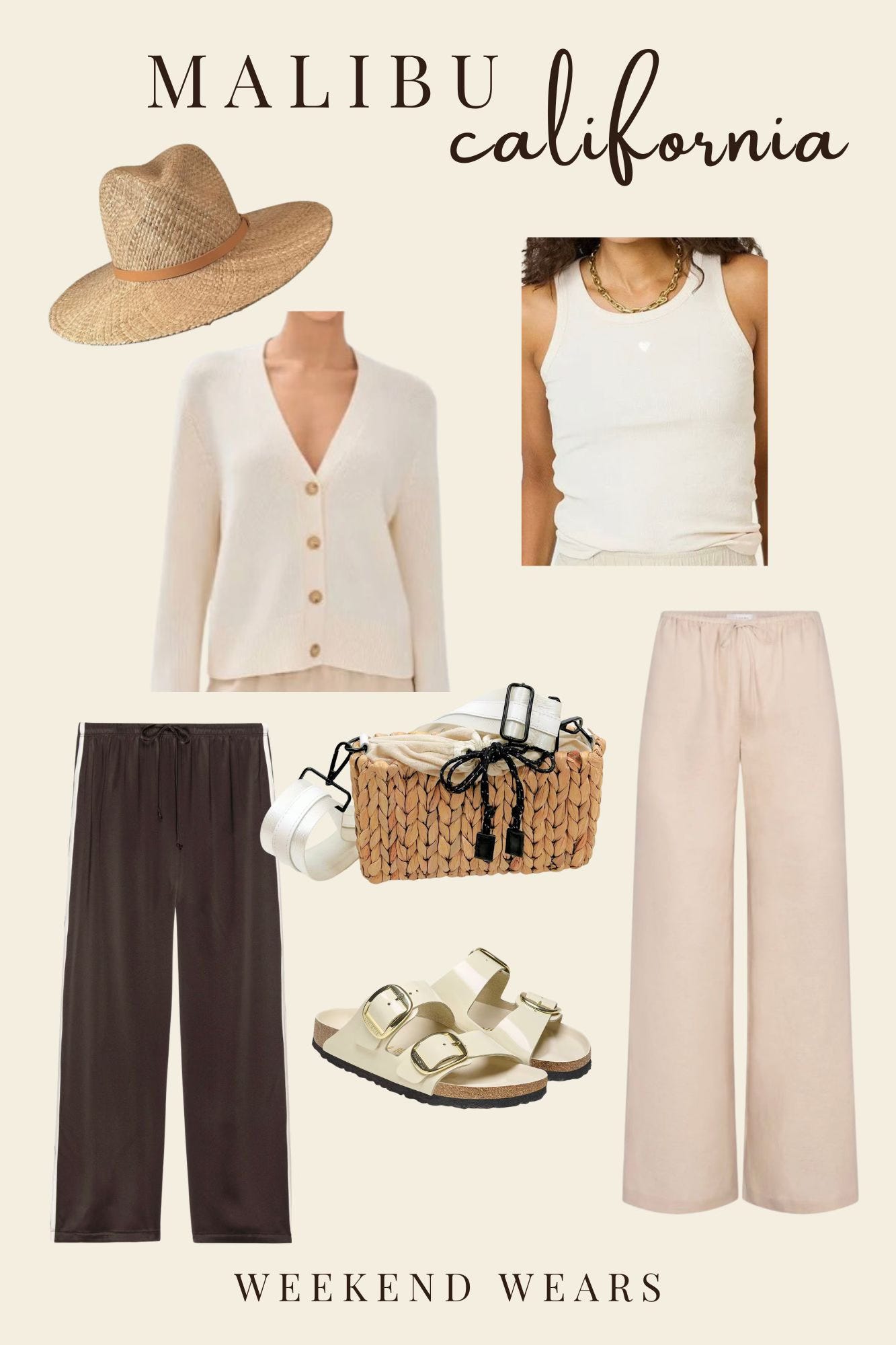
Malibu is one of the most relaxed places I visit. Getting dressed there technically looks like a hoodie and flip flops. I elevate that my way, a cozy cashmere cardigan, a slightly elevated tank top, my beloved Birkenstocks, and anything drawstring these days (loving that vibe). I never need to bring much. My daughter’s closet handles the rest. But the hat and the bag… all mine and both from my wildly talented friend at Anya & Niki. The crossbody straw bag stops people all the time. And the hat... a requirement as I am diligently working to offset skin damage of the past.
This is the other cube.
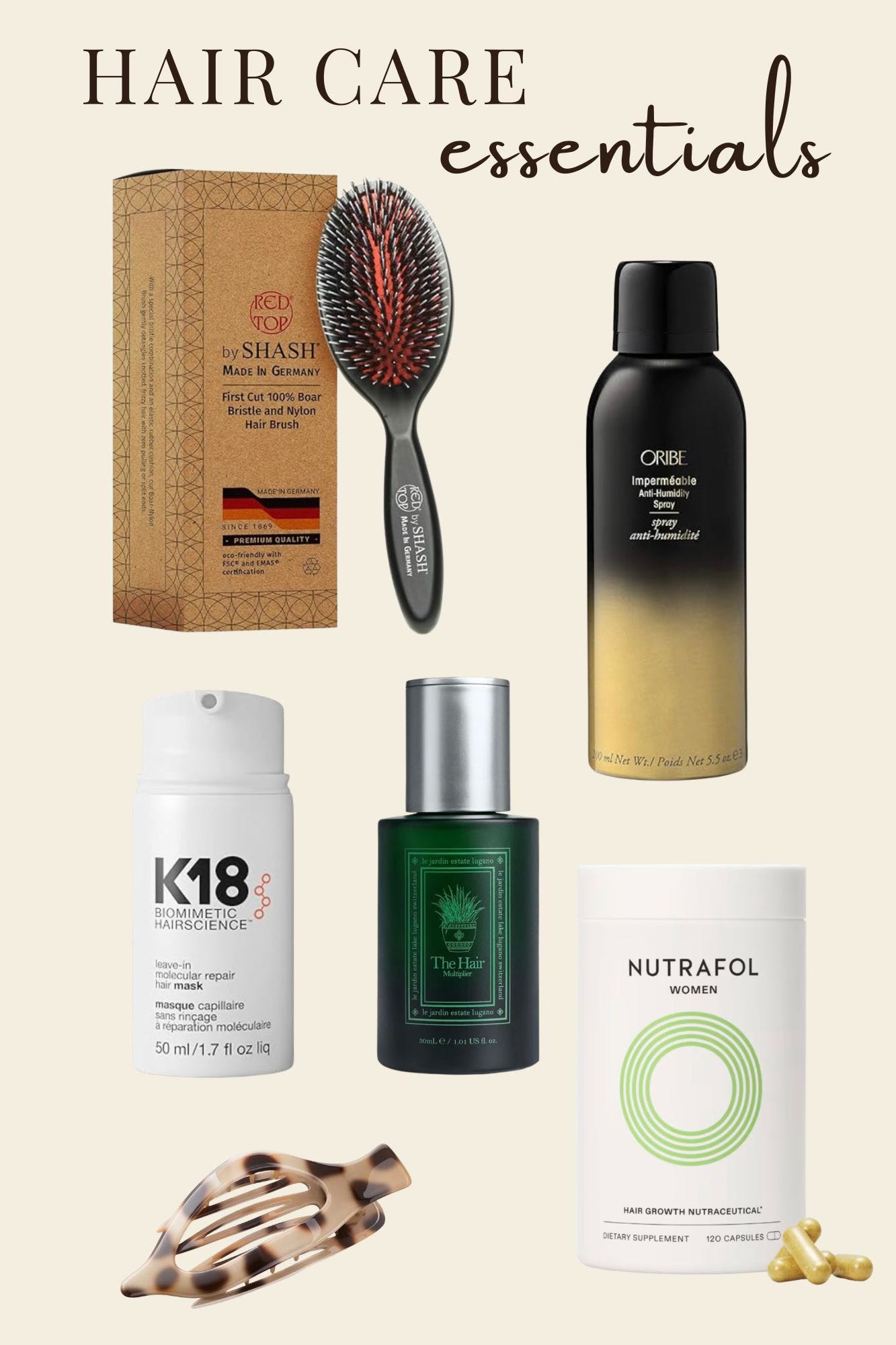
My daughter has a thick head of beautiful curls. I have stress, age, and hormones, which have caused major fallout. Truly, alarming. The kind of alarming that has you researching things at midnight and being more honest with your doctor than you have been in years.
The K18, the Nutrafol, the Oribe, the brush I will not travel without. Not an immediate fix. But over the past year, they’ve helped me rebuild. I won’t leave them behind. And my daughter, bless her curls, doesn’t own them for me to borrow.
That’s the honest cube.
Always EDITing,
Leslie
P.S. — A small thing.
There’s a boutique in Malibu I love. I discovered it on my last trip. The owner is one of those people I could talk to for hours, and her shop is the kind of curated that doesn’t feel staged. I’d like to send something from there to one of you.
Subscribers only. Leave a comment on this post. I’ll pick someone next Saturday (5/9) and DM you here on Substack.
If this lands well, maybe we make it a regular thing. I have a lot of fun travel coming up, and so much I know I’ll want to share.
Hi Leslie. I loved your post. I’m commenting partly because you asked me to and partly because commenting makes me uncomfortable. I am one of those people who keeps my life private, no posting, no sharing. I’ve always thought it was more authentic that way. But I’ve realized recently that some of that is carefully curated silence that also speaks volumes, as you have said. This is my tiny little step one to opening up a little and seeing how this feels. Hope you are well. Keep sharing, please, and I’ll try to do the same ❤️
Like a breath of fresh air! Thank you for sharing Leslie. Your words are inspiring.